 Tiny Timeline
How to Potty Train: Readiness, Accidents & Poo Refusal
Potty training can feel like a big leap, and every parent worries about getting it right. Take heart. Readiness is about signs, not a fixed birthday, and accidents are simply part of learning. This gentle, evidence-based guide covers when and how to start, using praise instead of pressure, and what to do about the poo worries no one warns you about, including holding on and constipation. It is built on current NHS and ERIC guidance.
When should I start potty training, and how?
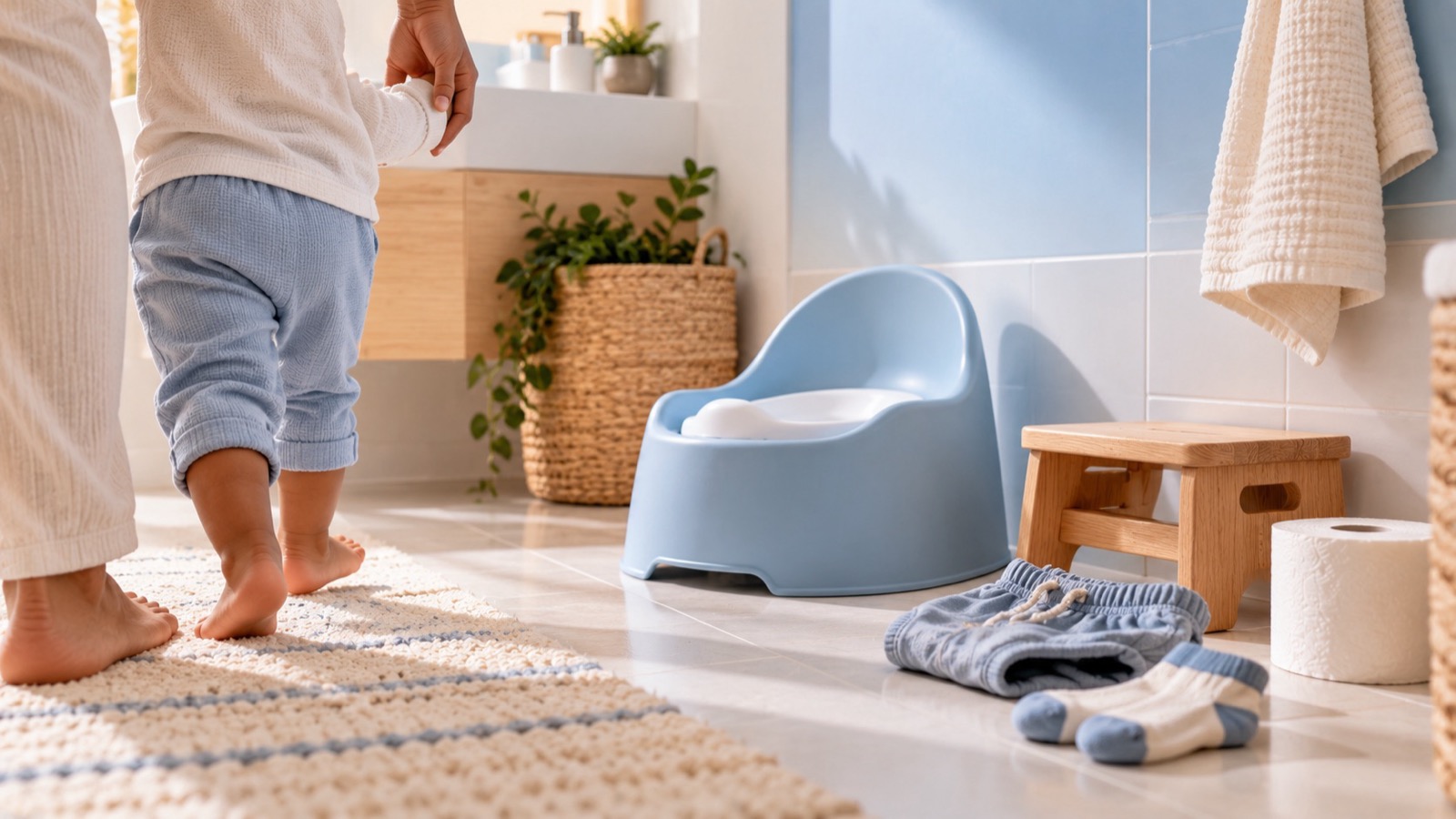
Most children are ready between 18 months and 2 and a half years, but there is no single “right” age.[1][2] Rather than waiting for a perfect checklist of signs, current NHS advice is simply to start, gently and without pressure.[1] Watch for readiness signs, but do not wait for them all before you start.[1]
Leave a potty where your child can see it, dress them in easy-to-pull-down clothes, and praise every try, whether or not anything happens.[1] Accidents are a normal part of learning and happen to most children, so stay calm and clean up together.[1] Getting cross tends to make things harder, not easier. If your child holds their poo, or seems constipated, treat it early. This is very common, and very fixable.[3][4]
How bladder and bowel control develops
Using a potty is a surprisingly big skill. Your child has to notice the full feeling, hold on for a moment, get to the potty, and then let go in the right place. Learning to control the bladder and bowel is a complicated process, and children need to be both physically and emotionally ready.[2]
This is why readiness is about signs of growing awareness, not a number on the calendar. As ERIC, the children’s bowel and bladder charity, puts it, there is “no ‘right’ age to potty train but each child will have their own ‘right’ time”.[2] Most children show those signs somewhere between 18 months and 3 years.[2]
Children also learn so much by watching and copying.[2] Let your toddler see you or an older sibling use the toilet, and talk about wees and poos in a matter-of-fact way. This quietly lays much of the groundwork.[2]
Here is the part that surprises many parents. You do not have to wait for a full set of signs before you begin. The NHS now advises that “the best thing to do is to start the training”, and that “you do not need to wait for your child to show signs or ask to use a potty before you start”.[1] Often, starting gently is how you find out whether your child is ready.
So keep an eye out for signs of readiness, but once your child is around 18 months to 2 and a half, a gentle start need not wait for a full checklist. Try not to feel pressured by nurseries, grandparents or other parents, and equally, try not to put it off forever.[2]
Potty training readiness signs (and when to start)
The signs below are clues that your toddler is starting to notice and control what their body is doing. You do not need every one before you start.[1] Think of them as encouragement, not a test.
Readiness signs checklist
- Stays dry for at least a couple of hours, or wakes dry from a nap. This suggests the bladder can now hold on a little.[2]
- Has fairly regular, predictable poos.[2]
- Shows they know a wee or poo is coming, perhaps by pausing, going quiet, fidgeting, hiding, or telling you.[2] Your child may say when they are wet or when they are having a wee or poo. Many do not, and that is completely normal.[1]
- Can follow a simple instruction like “find your potty” or “do you need a wee?”[2]
- Can walk to the potty, and sit down and get up again with only a little help.[2]
- Shows an interest in the toilet, and in others using it, and likes to copy.[2]
On age, the NHS is reassuring: “almost all children can be potty trained between 18 months and 2-and-a-half years old”.[1] Some are ready a bit earlier, some later, and both are fine. A good moment to begin is when your child is not in the middle of a firm “no” phase, and when family life is fairly settled.[2]
Daytime first, then dry nights
Daytime dryness comes first. Staying dry at night is a separate, later step, and it is not something you teach. The NHS explains that “most children learn to stay dry at night after they are dry during the day”, and that this “happens naturally over time”.[1]
Night dryness depends on your child’s body making less wee overnight, and on them waking if the bladder is full. That can take much longer to develop. Many children under the age of 5 still wet the bed, and bedwetting often runs in families.[5] So a dry day and a wet night, for months or even a couple of years, is completely normal. Keep night-time nappies or pull-ups on until your child is reliably dry, and try not to make a thing of it.
How to start potty training, step by step
There is no single method that works for every child, but this gentle, unhurried approach suits most families. The golden rule running through all of it is praise, not pressure.
- Get the kit ready. You need a potty, or a child seat and a step for the big toilet, plus clothes that are easy to pull up and down, such as joggers or leggings.[1] Let your child help choose their potty and pants, and keep the potty somewhere they can reach it.[2]
- Talk about it and let them watch. Read potty books together, use a doll or toy to show how it works, and let your child see the toilet being used.[1][2] Children learn by copying.
- Build a gentle routine. Offer the potty at natural moments, such as after meals. A sit 20 to 30 minutes after eating makes the most of the body’s natural urge to poo.[4] Trying after a drink, and before you head out, also helps.
- Keep sits short and pressure-free. A couple of minutes is plenty. Never force your child to sit if they resist, and let them get up when they want to.[2] A song or a book can make it a nice moment together.
- Praise the effort, not just the result. “Praise them for trying, whether or not they manage a wee or poo.”[1] Helping your child feel proud builds the confidence that carries them through.
- Expect accidents, and stay calm. “Accidents are a normal part of learning and happen to most children.”[1] When they happen, “try not to get angry or upset with your child. Stay calm, clean up together and move on”.[1]
- Keep everyone consistent. Tell your nursery, childminder and grandparents what you are doing, so every carer responds in the same calm way.[2]
If you hit lots of accidents and very little progress, it is completely fine to pause. ERIC suggests you “may consider going back to nappies and leaving potty training for a while”, because your child may simply not be quite ready yet.[2] That is a pause, not a failure. Wait a few weeks and try again. Shame and telling off tend to backfire and slow things down, so the calm, patient route really is the faster one in the end.
Poo refusal, constipation and setbacks
This is the part of potty training that catches many parents off guard, and it deserves its own space. If your child will happily wee but not poo, or keeps holding on, you are far from alone.
When your child holds their poo
Lots of children wee on the potty but hold on to their poo, or ask for a nappy to poo in. This is very common, and it is worth taking seriously, because holding on is closely linked to constipation.
Constipation itself is very common. ERIC notes it “affects 1 in 3 children, even babies”, and urges, “don’t wait for it to get better by itself”.[4] If a poo has been hard or painful even once, a child can become frightened and start to hold on. The NHS describes the vicious circle plainly: “the more they hold back, the more constipated they get”.[3]
Held-in poo builds up and hardens, which the ERIC guide calls a “poo traffic jam”.[4] Signs of constipation include doing fewer than 3 poos a week, poo that is large and hard or looks like “rabbit droppings”, straining or pain, a tummy ache, and sometimes a little blood on the surface from a hard poo.[3] Soiled or skiddy pants can be a sign too. Runny poo leaks around the blockage as “overflow”, and your child has no control over it.[3][4]
How to help: soften, treat, never punish
The aim is to make poo soft and comfortable again, so it stops hurting and stops being scary. Offer 6 to 8 water-based drinks a day, and plenty of fruit and vegetables for fibre.[4] A small footstool that brings the knees above the hips, with feet flat and supported, makes pooing much easier.[4]
If constipation does not settle quickly, see your GP. Diet alone is often not enough. A GP can prescribe a gentle macrogol laxative such as Movicol or Laxido, which “softens poo and helps move it along”.[4] These are safe to use for as long as they are needed. As ERIC reassures parents, “laxatives won’t hurt them”, but “undertreating constipation will”.[4] Keep going at the dose that keeps poos soft, even once things improve, so the problem does not simply come back.[3]
Whatever happens, never tell off, punish or shame your child for holding on, soiling, or having an accident. “Getting constipated and soiling their clothes is not something your child is doing on purpose.”[3] Shame makes a frightened child hold on more, which makes everything worse. Calm, patient encouragement is what breaks the cycle.
Setbacks and going backwards
A child who was doing well can suddenly start having accidents again. This is normal, and there is usually a reason behind it. Big changes unsettle toddlers, and the NHS lists “moving house, the arrival of a new baby, or starting nursery or school” among the worries that can trigger constipation and setbacks.[3] Illness, a holiday or a new routine can all knock things off course for a while. Stay warm and consistent, keep constipation at bay, and most children soon find their feet again.
When to see your GP or health visitor
Potty training itself is not a medical event, but a few things are worth checking. Speak to your GP or health visitor if your child:
- seems constipated or is holding on, and it does not settle with more fluids and fibre. The NHS advises you “take them to a GP” and “get help early”.[3]
- is in pain when they poo, passes very hard or large poos, or you see blood.[3]
- has started wetting or soiling again after being reliably dry, especially if it comes on suddenly.[5]
- shows signs of a urinary tract infection (UTI), also called a urine infection, such as needing to wee suddenly or often, pain when weeing, tummy pain, a high temperature, or new daytime wetting or bedwetting.[6] A full bowel can press on the bladder and cause wetting and urine infections too.[4]
- keeps getting urine infections. Recurrent infections, meaning “2 UTIs in 6 months (or 3 within 12 months)”, need a GP review.[6]
- is making no progress at all despite gentle, consistent tries, or is very distressed by the whole process.[2]
For a suspected urine infection in a child, the NHS says to “ask for an urgent GP appointment or get help from NHS 111”.[6] Trust your instincts, and ask for help sooner rather than later.
Frequently asked questions
What age should I start potty training? There is no single right age. Most children show signs of being ready between 18 months and 3 years, and “almost all children can be potty trained between 18 months and 2-and-a-half years old”.[1][2] You do not have to wait for a full checklist of signs. The NHS suggests the best thing is simply to start gently, without pressure.[1]
What are the signs my child is ready? Helpful signs include staying dry for a couple of hours, having fairly regular poos, showing they know a wee or poo is coming, following a simple instruction, and being able to sit on and get off a potty.[2] Your child may start telling you when they are wet, though many do not, and that is normal.[1] You do not need every sign before you begin.
How long does potty training take, and does 3 day potty training work? It varies hugely. You may have seen “3 day potty training” methods, and some children really do click quickly, but for many it takes much longer, so go at your child’s own pace and stay patient.[2] Accidents are a normal part of learning and happen to most children, so expect a few along the way.[1] If there is very little progress, it is fine to pause and try again in a few weeks.[2]
My child wees on the potty but holds their poo. What do I do? This is very common, and it is usually about fear of a hard or painful poo, so the answer is to keep poo soft. Offer plenty of water and fibre, use a footstool so their feet are supported, and never punish or rush them.[4] If holding on carries on, or poo is hard or painful, see your GP, as a gentle laxative often breaks the cycle.[3][4]
Are potty training accidents and going backwards normal? Yes. Accidents are part of learning, and setbacks are common, especially around big changes like a new baby, a house move or starting nursery.[1][3] Stay calm, keep the routine going, and watch for constipation, which is a frequent hidden cause. If your child was dry and suddenly is not, it is worth a chat with your GP.[5]
When will my child be dry at night? Later than day dryness, and on its own timetable. Night dryness “happens naturally over time”, usually after your child is dry in the day, and it is not something you can teach.[1] Many children under 5 still wet the bed, and it often runs in families, so keep night nappies on without fuss.[5]
Should I ever worry, or see a GP? Potty training is not usually a medical matter, but do see your GP if your child is constipated or in pain, passes blood, keeps getting urine infections, starts wetting again after being dry, or is very distressed.[3][5][6] For a suspected urine infection in a child, contact a GP or NHS 111 the same day.[6]
Spotting patterns with Tiny Timeline
Potty training is really a game of patterns, and patterns are hard to hold in your head when you are tired. That is where a quiet record helps. In Tiny Timeline you can log wees and poos as they happen, and let the app do the remembering.
Over a week or two, those logs start to show you things. You might see the gap between wees slowly stretching out, which is a lovely early sign that the bladder is learning to hold on. You might spot that poos tend to come after breakfast, which tells you the best time to offer the potty. Little clues like these make the whole thing feel less like guesswork.
The same record is genuinely useful if poo becomes a worry. Noting how often your child poos, and what it looks like, helps you catch constipation early, before a small problem grows. If you do see your GP or health visitor, that history is far more helpful than trying to remember a blurry fortnight.
And because the family view is shared, parents, grandparents and your childminder can all see the same picture and respond in the same calm, consistent way. Tiny Timeline is a memory aid and a keepsake, not a medical tool. For any worry about your child’s bladder, bowel or development, your GP or health visitor is always the right first call.
Key takeaways
- Readiness is about signs, not a fixed age. Most children are ready between 18 months and 2 and a half years, and there is “no ‘right’ age”.[1][2]
- You do not need to wait for a full checklist. The NHS advises that the best thing to do is to start gently, without pressure.[1]
- Praise, do not pressure. Praise every try, keep sits short, and never force a child to sit.[1][2]
- Accidents are normal, and shame backfires. Stay calm, clean up together, and move on.[1]
- Night dryness comes later. It happens naturally over time, and many children under 5 still wet the bed.[1][5]
- Poo holding and constipation are common, and treatable. Soften the poo with fluids, fibre and, if needed, a GP-prescribed laxative, and never punish.[3][4]
- Setbacks often follow big changes. A new baby, a house move or nursery can trigger them, so keep things calm and consistent.[3]
- See your GP for constipation, pain or blood, no progress, a returning wetting problem, or recurrent urine infections.[3][5][6]
How Tiny Timeline can help
Log wees, poos and dry stretches in Tiny Timeline to see your child's own rhythm, catch constipation early, and keep every carer on the same page. A calm, shared record takes the guesswork out of those first potty weeks. Tiny Timeline is a baby tracker, not a medical device, and nothing here replaces advice from your GP or health visitor.
References
- NHS - Potty training your child (Best Start in Life). https://www.nhs.uk/best-start-in-life/toddler/potty-training-your-child/
- ERIC (The Children's Bowel & Bladder Charity) - Potty training. https://eric.org.uk/potty-training/
- NHS - Constipation in children. https://www.nhs.uk/baby/health/constipation-in-children/
- ERIC (The Children's Bowel & Bladder Charity) - Constipation in children. https://eric.org.uk/childrens-bowels/constipation-in-children/
- NHS - Bedwetting. https://www.nhs.uk/conditions/bedwetting/
- NHS - Urinary tract infections (UTIs). https://www.nhs.uk/conditions/urinary-tract-infections-utis/