 Tiny Timeline
Toddler Fussy Eating: Is It Normal & What Helps
If dinner has become a nightly standoff, take a breath. You have not done anything wrong. Toddlers who suddenly refuse foods they loved last week are doing something completely normal for their age. Here is why picky eating happens, what genuinely helps at the table, and the signs that mean it is worth a chat with your GP or health visitor.
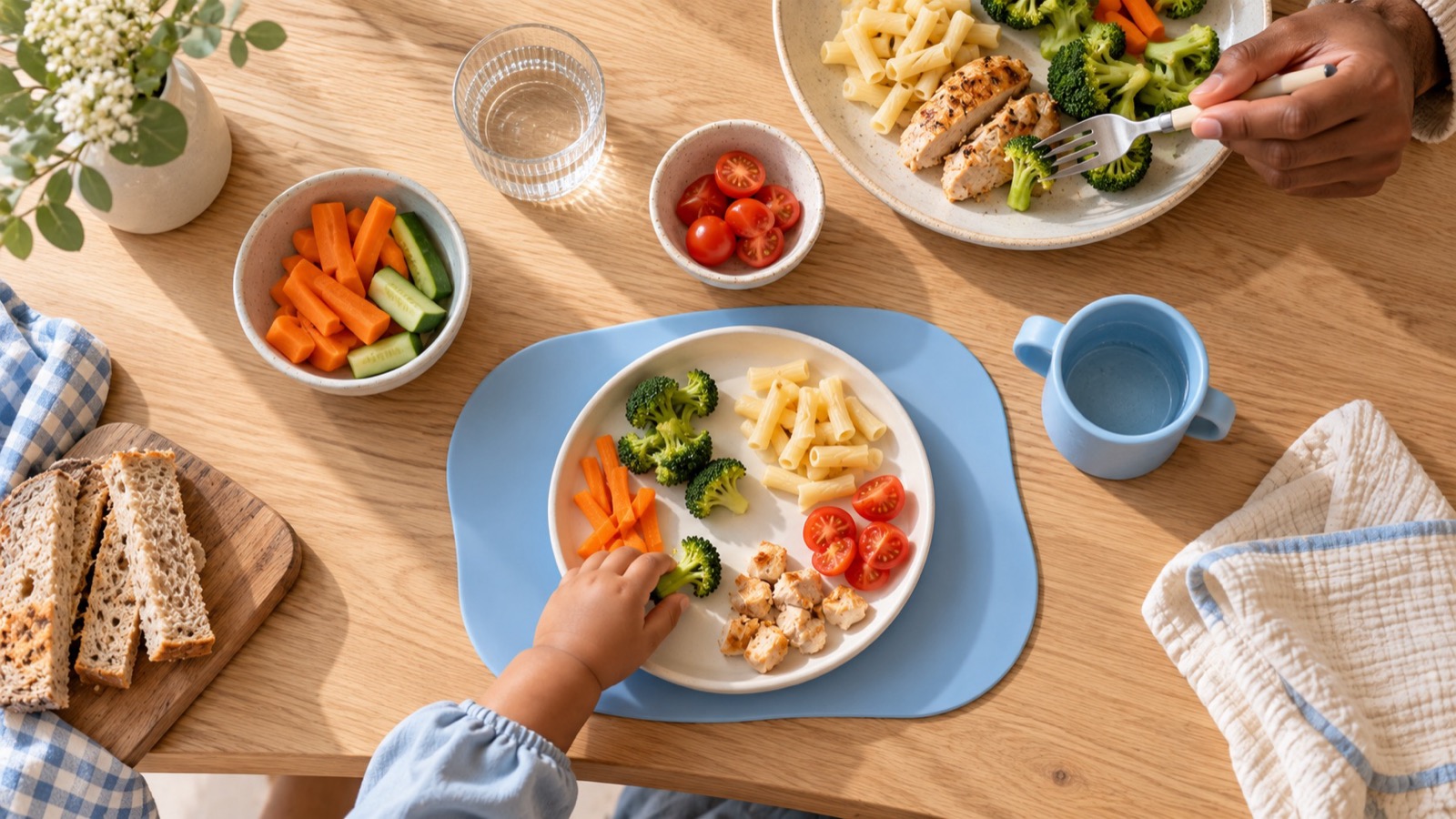
Is fussy eating in toddlers normal?
Yes. Fussy or picky eating is one of the most common worries of the toddler years. It is almost always a normal phase, not a sign you are getting anything wrong. The NHS is clear: "It's perfectly normal for toddlers to refuse to eat or even taste new foods."[1]
Your local NHS teams say the same. One NHS service tells parents "it is very common for toddlers and young children to seem fussy eaters at times," and reassures them that "most children's picky eating will improve over time."[5]
The most useful mindset shift is to stop judging one meal. The NHS advises: "Do not worry about what your child eats in a day or if they do not eat everything at mealtimes. It's more helpful to think about what they eat over a week."[1]
The quick answer
Toddler fussy eating is a normal stage, not a parenting failure. You decide what family food is offered; your child decides how much to eat. Keep offering refused foods and judge intake across the week. See your GP or health visitor about a very narrow diet, poor growth or low energy.[1][5]
Why do toddlers suddenly get so fussy?
It can feel personal, especially when a child who happily ate everything at nine months turns their nose up at almost everything at eighteen. It is not personal. Several very normal things are happening at once.
Fear of new foods is a built-in stage
Being wary of unfamiliar food has a name, food neophobia, and it is a normal part of growing up. The British Dietetic Association explains that a "fear of new foods affects up to one in every five children, typically when they're between 18 months and two years old."[4] Long ago, a toddler who refused strange berries was a toddler who stayed safe. That cautious reflex is still wired in today.
Their appetite is meant to wobble
Toddlers do not eat the same amount every day, and they are not supposed to. As one NHS resource puts it, "it's normal for children's appetites to vary from day to day," because "they will have growth spurts and be more active some days."[6] A big lunch is often followed by a tiny tea. That is your child listening to their own tummy.
Little tummies mean little portions
A toddler's stomach is small. NHS teams suggest keeping "portions small," because "your child has a little tummy," roughly "the size of their clenched fist."[5] A grown-up plateful can put a small child off before they start. Portion guides are just that, a guide, and "you may find there are some days where your child eats a little more and days where they eat less."[6]
Saying no is how they practise being a person
Somewhere around two, toddlers discover the power of "no." Food is one of the few things a small child can fully control, so the dinner table turns into a stage for growing independence. A refused vegetable is often less about the vegetable and more about wanting a say. Knowing this takes a lot of the heat out of it.
Tastes really do change
A rejection today is not a verdict for life. The NHS reminds parents that "children's tastes change," and that "one day they'll hate something, but a month later they may love it."[1] This is exactly why a calm, keep-offering approach works far better than pressure.
How fussy eating changes from 1 to 3 years
Picky eating does not look the same at every age. Here is a rough map of what tends to happen, and where to put your energy at each stage.
| Age | What you might see | What tends to help |
|---|---|---|
| Around 12 months | Keen to feed themselves; milk still a comfort; appetite dropping as growth slows | Move to family mealtimes; offer 3 meals and about 2 snacks; let them get messy and self-feed |
| 18 months to 2 years | The classic wary phase; refusing foods they used to eat; suspicious of anything new or of foods touching on the plate | Keep offering tiny amounts with no pressure; eat the same food alongside them; expect many tries |
| 2 to 3 years | Power struggles, strong opinions, living on a few favourites, changing their mind mid-meal | Offer simple closed choices; stay calm and neutral; hold the boundary without a battle |
Around your child's first birthday
At twelve months, mealtimes shift. The NHS Best Start advice is that "now your toddler is 12 months old, they should be having 3 meals a day," and "they may also need 2 healthy weaning snacks in between."[3] Milk still matters but is no longer the main event. Aim for "at least 350ml (12oz) of milk a day, or 2 servings of foods made from milk, such as cheese, yoghurt or fromage frais."[2] Too much milk can fill a small tummy and leave no room for meals.
Eighteen months to two years: peak pickiness
This is when many parents first reach for the word "fussy." It lines up neatly with the neophobia window the dietitians describe.[4] Your toddler may gag at a new texture, refuse a food because it touched another, or only eat a few foods on repeat, perhaps three or four. It is tiring, but it is textbook toddler. The job now is not to win, but to keep new foods gently in view. As NHS teams advise, "keep offering other foods in very small amounts."[5]
Two to three years: the little negotiator
Older toddlers can turn eating into a test of wills. This is where staying out of the fight matters most. NHS teams urge parents to "try not to get into mealtime battles," because "they rarely work and can increase the anxiety."[5] Offer the meal, offer a simple choice within it, and let your child decide how much of it to eat. The good news, again, is that "most children's picky eating will improve over time."[5]
What actually helps toddler fussy eating?
There is no clever trick that makes a toddler eat broccoli tonight. The best way to deal with a fussy eater is a calm, consistent approach that lowers the pressure and plays the long game. Dietitians and the NHS point to the same handful of habits.
Share the job: you decide what, they decide how much
This one idea takes more stress out of mealtimes than anything else. You are in charge of what food is offered, and when and where. Your child is in charge of whether they eat it, and how much. The NHS frames the parent's half plainly: "you decide what your child has to eat at home," and you do not need to "offer them other options once you have decided what's for lunch."[5] Your child's half is just as important: let them "eat until they show or tell you they do not want any more,"[6] and "if your child rejects the food, do not force them to eat it."[1]
Keep offering, without pressure
A first no is not a final no. The British Dietetic Association says "it can take up to fifteen tries of a new food before children accept it, and their tastes will often change."[4] So put a tiny amount of the refused food on the plate again another day, with no comment and no fuss. The BDA even suggests you "give them control" and "let them spit it out if they really don't like it," and it tells parents not to "get cross or force children to eat."[4]
Eat together and let them copy you
Children learn to eat by watching you eat. The NHS says "the best way for your child to learn to eat and enjoy new foods is to copy you," so "try to eat with them as often as you can."[1] Where you can, serve your toddler the same food as everyone else, just without added salt.[1] The BDA agrees: "serve children what you're eating," because "they're more likely to try things that the whole family's tucking into."[4]
Keep portions and expectations realistic
Serve small. The NHS advises you "give small portions and praise your child for eating, even if they only eat a little."[1] A small plate feels doable, and a child who clears it feels proud and can always ask for more. Praise the eating, not the amount, and try to keep your own face neutral when a food is left.
Make the table a nice place to be
Calm, screen-free and unhurried beats tense and drawn out. The NHS suggests you "make mealtimes enjoyable and not just about eating," and "sit down and chat about other things."[1] Health teams recommend keeping meals to roughly twenty to thirty minutes, without the pull of a television or tablet.[5] Letting your child get used to how a food looks and feels through relaxed play helps too: it is one of "the best ways to combat fussy eating."[4]
Mealtimes: do this, not that
| Try this | Not this |
|---|---|
| Offer the food calmly and let them leave it | Force, beg or spoon it in "for mummy" |
| Serve a small portion, then offer more if wanted | Pile the plate high to "get it into them" |
| Put refused foods back on the plate another day | Give up after one or two tries |
| Eat the same meal together as a family | Cook a separate "safe" meal every night |
| Keep pudding a normal part of the meal | Promise pudding as a reward for clearing the plate |
| Stay calm and neutral about refusals | Show worry, anger or a big reaction |
That pudding point matters. The NHS is specific: "do not use food as a reward," because "your child may start to think of sweets as nice and vegetables as nasty."[1] Making dessert the prize teaches exactly the wrong lesson.
When to worry: signs to talk to your GP or health visitor
The vast majority of fussy toddlers are healthy toddlers who are growing and thriving. But a small number have something more going on, and you know your child best. Trust your instincts, and get advice if any of the signs below ring true.
Talk to your GP or health visitor if...
- Your child eats a very narrow range of foods. NHS teams suggest seeking advice if "your child is eating less than ten different foods."[5]
- You are worried about their weight or growth, including losing weight or not gaining as expected.[5][7] Your health visitor can weigh your child and plot their growth.
- Your child seems tired and low on energy, or you are worried they are missing out on nutrients.[5]
- Mealtimes involve frequent gagging, coughing or choking, or your child cannot manage textures that most children their age can, or stays stuck on very smooth or soft foods.
- Refusing food comes with real distress, strong reactions to smells or textures, or fear around eating, and is getting more extreme rather than slowly easing.
Your health visitor or GP can check your child over and, if needed, refer you to a dietitian or feeding specialist.
When picky eating might be more than a phase
Sometimes very restricted eating is part of a recognised difficulty called avoidant/restrictive food intake disorder (ARFID). The UK eating disorders charity Beat describes it as "avoiding certain foods or types of food, having restricted intake in terms of overall amount eaten, or both."[7] It is more than ordinary fussiness.
Beat describes three common patterns. Some children are "very sensitive to the taste, texture, smell, or appearance" of food.[7] Some have had "a distressing experience with food, such as choking or vomiting," and become frightened of eating.[7] Others simply "have a poor appetite" and little interest in food.[7] Signs can include "always having the same meals" and, in children, "not gaining weight as expected."[7] These patterns more often go alongside autism, ADHD or anxiety.[7] If this sounds like your child, it is worth a conversation with your GP or health visitor. This is not about labelling a normal picky toddler. It is about getting support when eating is genuinely restricted or distressing.
Choking is always an emergency
Gagging is noisy and normal as toddlers learn to handle new textures. Choking is different, and it is often silent. If your child cannot breathe, cough or cry, shout for help and start back blows and thrusts. The NHS says to "call 999 if the blockage doesn't come out after trying back blows and either chest or abdominal thrusts."[8] Learning child first aid before you ever need it is well worth an evening.
Frequently asked questions
How many times should I offer a food my toddler keeps rejecting? Keep going well past the first no. The British Dietetic Association says it "can take up to fifteen tries of a new food before children accept it."[4] Offer a tiny amount another day, with no pressure, and expect tastes to change over time.[1]
Should I make a separate meal if my toddler won't eat dinner? Try not to. The NHS view is that you decide what is offered, and you do not need to "offer them other options once you have decided what's for lunch."[5] A short-order kitchen quietly teaches a child that refusing brings something better. Keep offering the family meal, calmly.
Is it OK to promise pudding if my toddler eats their vegetables? It is best avoided. The NHS says "do not use food as a reward," because it can make sweets seem "nice" and vegetables "nasty."[1] Offer a small pudding as a normal part of the meal instead, not as a prize.
My toddler eats almost nothing some days. Is that normal? Usually, yes. Appetites "vary from day to day" with growth spurts and activity.[6] Look at the whole week rather than one plate.[1] If your child is active, growing and generally well, they are very likely getting enough.
Is fussy eating a sign of autism? On its own, no. Picky eating is extremely common in typically developing toddlers. That said, very restricted eating with strong sensory aversions can sometimes sit alongside autism, ADHD or anxiety.[7] If you have wider worries about your child's development, speak to your health visitor or GP.
Will my toddler grow out of being picky? Most do. NHS teams say "most children's picky eating will improve over time," and tastes keep changing with age.[5][1] Staying calm and low-pressure now helps your child get there sooner.
My toddler only eats beige food. Should I worry? A run of pale carb favourites is very common and usually passes. Keep offering small tastes of other colours and textures alongside, without pressure.[5] Seek advice if the range keeps shrinking, or you have weight or energy concerns.[5]
Seeing the bigger picture with Tiny Timeline
When you are worried about fussy eating, the most reassuring thing is usually perspective. One refused dinner feels enormous in the moment. Seen across a whole week, it often melts into a perfectly normal pattern of hungry days and picky days. That weekly view is hard to hold in a tired head, which is where a simple log helps.
With Tiny Timeline you can jot down what you offered and what your toddler actually ate, in seconds, without turning mealtimes into a science project. Over a couple of weeks, patterns appear. You might spot that your child eats better at lunch than tea, or that a food refused six times was finally accepted on the seventh. Your "terrible eater" may be managing a decent variety across the week after all.[1]
Because progress with new foods can take ten to fifteen tries, keeping a quiet tally is genuinely encouraging.[4] It turns slow, invisible wins into something you can see. If you ever speak to your health visitor or GP, that record helps. It gives them a clear, honest picture of what your child eats, rather than a stressful guess.[5]
If more than one person feeds your toddler, shared family logging keeps everyone on the same calm page. That way a grandparent, partner or nursery is not quietly offering pudding as a bribe while you gently hold the line.
Key takeaways
- Toddler fussy eating is a normal developmental stage, not a parenting failure. Wariness of new foods peaks between about 18 months and 2 years.[1][4]
- Judge intake over a week, not a single meal. Appetites naturally vary from day to day.[1][6]
- Share the job: you decide what food is offered and when, your child decides whether and how much to eat. Never force.[1][5][6]
- Keep offering refused foods in tiny amounts. It can take up to fifteen tries.[4]
- Eat together, serve small portions, stay calm, and skip the bribes. Do not use pudding as a reward.[1][4]
- Talk to your GP or health visitor about a very narrow range of foods, weight or growth worries, low energy, ongoing trouble with textures, or strong sensory aversions. These can occasionally point to ARFID.[5][7]
How Tiny Timeline can help
Fussy days feel smaller when you can see the whole week. Jot down the foods you offer and what your toddler actually accepts, watch the slow wins add up over ten to fifteen tries, and keep every carer on the same calm page. If you ever need your health visitor, you will have the real picture ready. Tiny Timeline is a baby tracker, not a medical device, and nothing here replaces advice from your GP or health visitor.
References
- NHS: Fussy eaters. https://www.nhs.uk/baby/weaning-and-feeding/fussy-eaters/
- NHS: What to feed young children. https://www.nhs.uk/conditions/baby/weaning-and-feeding/what-to-feed-young-children/
- NHS Best Start in Life: Feeding your baby, 1 year and beyond. https://www.nhs.uk/best-start-in-life/baby/weaning/what-to-feed-your-baby/over-12-months/
- British Dietetic Association: Fussy eaters. https://www.bda.uk.com/food-health/lets-get-cooking/cooking-at-home/fussy-eaters.html
- NHS (Just One Norfolk): Fussy Eaters. https://www.justonenorfolk.nhs.uk/healthy-lifestyles/eat-better/fussy-eaters/
- NHS (Health for Under 5s): Portion size matters. https://healthforunder5s.co.uk/sections/toddler/portion-size-matters-your-questions-answered/
- Beat: ARFID (avoidant restrictive food intake disorder). https://www.beateatingdisorders.org.uk/get-information-and-support/about-eating-disorders/types/arfid/
- NHS: How to stop a child from choking. https://www.nhs.uk/conditions/baby/first-aid-and-safety/first-aid/how-to-stop-a-child-from-choking/