 Tiny Timeline
Baby refusing solids? Why it happens and what to do
If your baby is turning their head away, spitting food out or clamping their mouth shut, you are not doing anything wrong. Refusing solids is one of the most common worries in the early months of weaning, and it is almost always a normal part of learning to eat. Here is why it happens, and how to help calmly and without a battle.
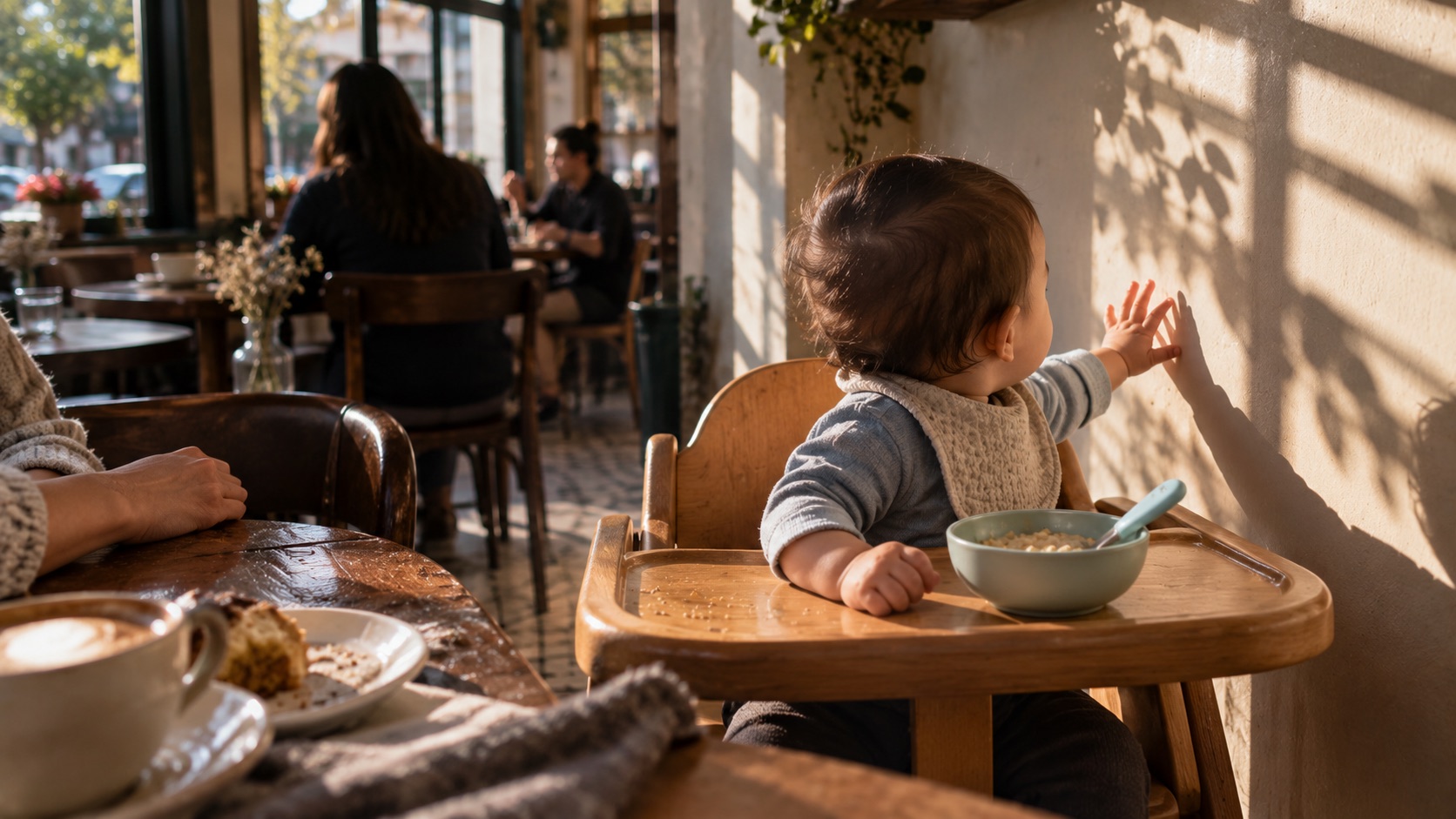
Is it normal for my baby to refuse solids?
Almost always, yes. A baby refusing solids is one of the most common worries in the early months of weaning, and most of the time it is simply part of learning a brand-new skill. The NHS puts it plainly: "It's perfectly normal for toddlers to refuse to eat or even taste new foods."[1] Younger babies just starting out are no different.
The NHS tells parents to expect ups and downs: "There will be days when they eat more, some when they eat less, and then days when they reject everything. Don't worry – this is perfectly normal."[4] One refused meal, or even a run of them, rarely means anything is wrong.
It also helps to remember that milk, not food, is still doing the heavy lifting: breast milk or first infant formula "provide the energy and nutrients your baby needs until they're around 6 months old".[3] In the early weeks the aim is not to fill them up, but to help them get used to new tastes and textures.
Try to judge things over a week rather than a single meal. The NHS advises: "Do not worry about what your child eats in a day or if they do not eat everything at mealtimes. It's more helpful to think about what they eat over a week."[1] And the simplest reassurance of all: "If your child is active and gaining weight, and they seem well, then they're getting enough to eat."[1]
Good to know
A baby's appetite is not meant to be steady. Growth, sleep, teething and mood all nudge it up and down, so a hearty eater one day and a food refuser the next is completely normal. What matters is the bigger picture over days and weeks, not any single meal.
Why does my baby keep refusing solids?
When your baby won't eat solids, it usually comes down to a handful of very ordinary reasons, often several at once. Here are the common ones, and what tends to help.
| Possible reason | What it can look like | What tends to help |
|---|---|---|
| It is all new | Turning away, spitting out, or a wary face at anything unfamiliar | Keep offering the same food on other days, without pressure |
| Teething or feeling poorly | Sore, red gums, dribbling, more fretful than usual, off their food for a few days | Something cool and safe to chew, and patience until they feel better |
| Full up on milk | A big milk feed just before a meal, then little interest in the spoon | Offer solids first and milk afterwards; watch feed timing |
| The texture or the pace | Gagging on lumps, refusing purée, or being rushed | Go at their pace and build up textures gradually |
| Wanting to be in charge | Batting the spoon away, grabbing at food, wanting to do it themselves | Offer finger foods and let them hold a spoon |
It is all new, and it takes many goes
New flavours and textures take real getting used to. The NHS says "it may take 10 or even more attempts for your baby to accept new foods, particularly as they get older",[2] and the British Nutrition Foundation puts the range wider still, at "5 - 15 times or more before your child learns to like them".[9] A baby who pulls a face is often just "getting used to new flavours and textures".[2] So a first refusal is not a final answer, and "children's tastes change. One day they'll hate something, but a month later they may love it."[1]
Teething or feeling under the weather
If your baby is teething, the tell-tale signs include a gum that "is sore and red where the tooth is coming through" and being "more fretful than usual".[6] Sore gums and feeling out of sorts can understandably take the edge off a baby's appetite, and the NHS expects there to be days when a baby eats less or rejects everything.[4] It usually passes within a few days. If your baby is six months or older, the NHS says "you can give them healthy things to chew on, such as raw fruit and vegetables", and that "soft fruit like melon can soothe gums".[7]
Full up on milk
Milk is filling, and a baby's "tummy is tiny and fills up quickly".[8] If a big milk feed lands just before a meal, there may be no room left for solids. The NHS advice is to "offer milk feeds after solids and do not force them to finish the bottle".[8] A formula-fed baby "may need around 600ml of milk a day" as a rough guide,[8] but as your baby eats more solids "they may naturally want less breast milk or first infant formula".[8]
The texture or the pace
Some babies happily take smooth purée but baulk at lumps, while others want to skip the spoon altogether. Moving through textures is a skill, and gagging is part of learning it: "gagging is a normal reflex as your baby learns to chew and swallow solid foods".[5] The answer is rarely to push harder. Instead, "go at your baby's pace and stop when they show you they have had enough",[2] and build up lumps and soft finger foods gradually as your baby manages them.
They want to be in charge
A baby who bats the spoon away is not always saying no to food. Sometimes they want to do it themselves, and letting them helps: "encourage your baby to feed themselves with their fingers. This way they can show you how much they want to eat, and it helps them get used to different foods and textures."[2] You can also invite them to join in: "You can even let your little tot have a go with the spoon!"[4]
My 6-month-old is refusing solids: is that normal?
A 6 month old refusing solids is very common, because around six months many babies are only just beginning. In the first days and weeks, tiny tastes, or none at all, are exactly what you would expect. Your baby is still getting almost everything they need from milk,[3] so there is no rush to get food in.
It is worth checking that your baby is showing the signs of being ready. The NHS says a baby who is ready will be able to "stay in a sitting position and hold their head steady", "co-ordinate their eyes, hands and mouth so they can look at the food, pick it up and put it in their mouth by themselves", and "swallow food (rather than spit it back out)".[3] If your baby is not doing all three yet, they may simply need another week or two.
Keep the door open by offering small amounts regularly and calmly. "Be patient and keep offering a variety of foods – even the ones they don't seem to like – and let them get used to it in their own time."[4] If your baby still shows no interest in solids by around six to seven months, or cannot seem to move on from milk, it is worth a chat with your health visitor.
What is responsive feeding, and why does it help?
Responsive feeding is a simple idea that takes the stress out of mealtimes: you decide what food to offer and when, and your baby decides whether to eat and how much. Your job is to offer suitable food calmly. Their job is to listen to their own tummy.
UK guidance backs this up. The NHS says to "let your baby guide you on how much food they need – never force them to eat",[4] and that "most babies know when they're full, so let your baby guide you and never force them to eat".[2] The British Nutrition Foundation puts it the same way: "the best approach is to offer food in a relaxed way and to let your child decide how much they want to eat".[9]
It helps because pressure tends to backfire. The British Nutrition Foundation warns that "pressurising or coercing your child into eating certain foods can sometimes work in the short-term, but this tactic may backfire because your child is likely to develop negative associations with the food".[9] Trusting your baby to set the amount keeps mealtimes positive, which is what makes a reluctant eater more willing over time.
How can I encourage my baby to eat solids without a battle?
The most effective approach to a baby refusing solids is low-key and unhurried. These NHS-backed habits do more than any single trick.
- Keep offering, gently. Go back to refused foods another day: "gradually introduce other foods and keep going back to the foods your child did not like before".[1] It can take ten tries or more,[2] so a "no" today is not forever. If your baby rejects something, "do not force them to eat it".[1]
- Skip the bribes. It is tempting to promise pudding for one more spoon, but "do not use food as a reward. Your child may start to think of sweets as nice and vegetables as nasty."[1] Using treats as a reward can actually "make children like the vegetable even less".[9]
- Eat together and let them copy you. "The best way for your child to learn to eat and enjoy new foods is to copy you. Try to eat with them as often as you can."[1] Babies "copy their parents and other children",[2] and sometimes "a child will eat for someone else, such as a grandparent, without any fuss".[1]
- Change how you serve it. A food refused one way may be welcome another: "your child might refuse cooked carrots but enjoy raw grated carrot".[1] Offer variety, including "vegetables that are not sweet, such as broccoli, cauliflower and spinach", to build a taste for a range of flavours.[3]
- Mind the milk timing. Offer solids first and milk afterwards, since a tiny tummy "fills up quickly".[8] Go easy on snacks too: for older babies and toddlers, "2 healthy snacks a day is plenty".[1]
- Let them get messy and feed themselves. Touching, squishing and self-feeding are how babies learn,[2] so hand over some soft finger foods and a spoon and accept that the floor will suffer.[4]
- Keep mealtimes calm and unrushed. "Try to stay calm, even if it's very frustrating",[1] and pick a time "when you do not feel rushed and your baby is not too tired".[4] Give small portions and "praise your child for eating, even if they only eat a little".[1]
How does milk affect my baby's appetite for solids?
Because milk is so filling, it is one of the most common reasons a baby won't eat solids. A large milk feed right before a meal can leave no appetite for the spoon, which is why the NHS suggests you "offer milk feeds after solids and do not force them to finish the bottle".[8]
This is about timing, not cutting milk back. Milk stays your baby's "main drink during the first year",[3] and babies under one "do not need snacks", so if yours seems hungry between meals the NHS suggests you "offer extra milk feeds instead".[8]
Good to know
Milk is not the enemy of weaning. In the first year it is still your baby's main source of nourishment, so the aim is to fit solids around milk feeds, not to swap one for the other.
Is gagging on solids the same as choking?
This worry keeps many parents from offering lumps at all, so it is worth being clear: gagging and choking are not the same thing. Gagging is normal as babies learn, because "gagging is a normal reflex as your baby learns to chew and swallow solid foods".[5] The giveaway is noise. "Gagging is loud", and your child's skin "may also look red when they're gagging".[5] A gagging baby is usually sorting the food out, so stay calm and let them.
Choking is different, and it is silent. "Choking is quiet."[5] A choking baby cannot cry, cough or make much noise. The colour signs vary with skin tone: "if your child has white skin, it may begin to look blue (cyanosis) when they're choking", and "if they have brown or black skin, their gums, inside their lips, or their fingernails may begin to look blue".[5]
| Sign | Gagging (normal) | Choking (emergency) |
|---|---|---|
| Noise | Loud: coughing, spluttering, retching | Quiet: little or no sound, cannot cough or cry |
| Skin colour | May look red | May begin to look blue, on the face, or on the gums, inside the lips or the fingernails |
| What you do | Stay close, stay calm, let them manage it | Act at once: back blows, and call 999 |
Whichever style of weaning you use, always "stay with your baby when they're eating in case they start to choke",[3] and sit them upright rather than reclined.
If your baby is choking, act at once
Remember: serious choking is usually silent. If your baby cannot cry, cough or breathe, "shout for help", "get them out of the high chair", and "support their chest and chin with one hand and – with the heel of your hand – give 5 sharp blows between the shoulder blades".[5] If it does not clear, call 999.[10] Because seconds count, it is well worth learning infant first aid before you start weaning.
When should I see a GP or health visitor?
Most of the time, a baby refusing solids needs patience rather than a professional: a child who is "active and gaining weight, and they seem well" is "getting enough to eat".[1] But there are times when it is sensible to get advice, and trusting your instincts is part of good parenting.
Speak to your health visitor or GP if…
Weaning is usually straightforward, but book a chat with your health visitor or GP if any of these apply:
- Your baby is not putting on weight as expected, or seems unwell. Steady weight gain and being generally well are the signs that a baby is getting enough,[1] so the opposite is worth checking.
- Your baby regularly gags, coughs or seems to struggle with certain textures instead of slowly getting better at them, or coughs and splutters at most meals.
- Your baby will only ever accept a very small range of foods, or point-blank refuses whole groups, such as anything with lumps.
- You are simply worried. If something does not feel right, you do not need to wait for a "good enough" reason to ask.
- Your baby was born prematurely. Your health visitor can advise on the right time to start and how to progress.[3]
And in an emergency, call 999: for choking that does not clear, or if your baby is struggling to breathe.[10]
Frequently asked questions
My baby won't eat solids at all. What should I do? Stay relaxed and keep offering small amounts regularly. Milk is still your baby's main source of nourishment in the first year,[3] and it can take "10 or even more attempts" before a new food is accepted.[2] If your baby still takes nothing after a few weeks of gentle trying, or you are worried, speak to your health visitor.
Is it normal for my 6 month old to refuse solids? Yes. At around six months many babies are only just starting, so small tastes, or none at all, are expected, and there will be "days when they reject everything".[4] Keep offering variety in their own time.[4]
Should I force or bribe my baby to take one more spoon? No. The NHS says to "never force them to eat",[2] and not to "use food as a reward".[1] Pressure and bribery tend to backfire, and can make a food even less appealing.[9]
My baby gagged on a lump. Is that dangerous? Gagging is a normal part of learning to eat, and it is loud, with skin that may look red.[5] Choking is different: it is quiet, and the baby cannot cough or cry. If your baby is choking, give back blows and call 999.[5][10]
Key takeaways
- A baby refusing solids is usually normal. Think about what they eat over a week, not a single meal, and expect off days.[1][4]
- Milk is still your baby's main food in the first year, so early solids are about practice, not filling up.[3]
- Common reasons include newness, teething or feeling poorly, being full on milk, the texture or the pace, and wanting to self-feed.[2][6][8]
- Try responsive feeding: you offer the food, your baby decides whether and how much, and you never force.[2][4][9]
- Low-pressure habits win: keep offering, eat together, let them get messy and self-feed, and skip the bribes.[1][2][9]
- Gagging is loud and normal; choking is silent, so call 999. See your health visitor or GP for poor weight gain, ongoing trouble with textures, a very narrow range of foods, or if you are worried.[1][5][10]
How Tiny Timeline can help
Keeping a quick note of what your baby was offered, what they actually ate and how hungry they seemed makes it easier to spot patterns over the week and to share the real picture with your health visitor if you ever need to. Tiny Timeline is a baby tracker, not a medical device, and nothing here replaces advice from your GP or health visitor.
References
- NHS – Fussy eaters. https://www.nhs.uk/baby/weaning-and-feeding/fussy-eaters/ (accessed Sep 2026)
- NHS – Help your baby enjoy new foods. https://www.nhs.uk/baby/weaning-and-feeding/help-your-baby-enjoy-new-foods/ (accessed Sep 2026)
- NHS – Your baby's first solid foods. https://www.nhs.uk/baby/weaning-and-feeding/babys-first-solid-foods/ (accessed Sep 2026)
- NHS (Best Start in Life) – How to start weaning your baby. https://www.nhs.uk/best-start-in-life/baby/weaning/how-to-start-weaning-your-baby/ (accessed Sep 2026)
- NHS Best Start in Life – Choking and gagging on food (safe weaning). https://www.nhs.uk/best-start-in-life/baby/weaning/safe-weaning/choking-and-gagging-on-food/ (accessed Sep 2026)
- NHS – Baby teething symptoms. https://www.nhs.uk/baby/babys-development/teething/baby-teething-symptoms/ (accessed Sep 2026)
- NHS – Tips for helping your teething baby. https://www.nhs.uk/baby/babys-development/teething/tips-for-helping-your-teething-baby/ (accessed Sep 2026)
- NHS (Best Start in Life) – 7 to 9 months - Feeding your baby. https://www.nhs.uk/best-start-in-life/baby/weaning/what-to-feed-your-baby/7-to-9-months/ (accessed Sep 2026)
- British Nutrition Foundation – Nutrition for toddlers and pre-schoolers. https://www.nutrition.org.uk/nutrition-for/toddlers-and-pre-school/ (accessed Sep 2026)
- NHS – How to stop a child from choking. https://www.nhs.uk/baby/first-aid-and-safety/first-aid/how-to-stop-a-child-from-choking/ (accessed September 2026)